Everything before consent. Memory after.
The full product works before anyone touches a banner: clicks by their visible label, scroll depth, active time, attention, conversions - all counted anonymously. Consent adds exactly one thing, identity across days. A decline subtracts nothing.
The examples below use demonstration figures to show the available measurements.
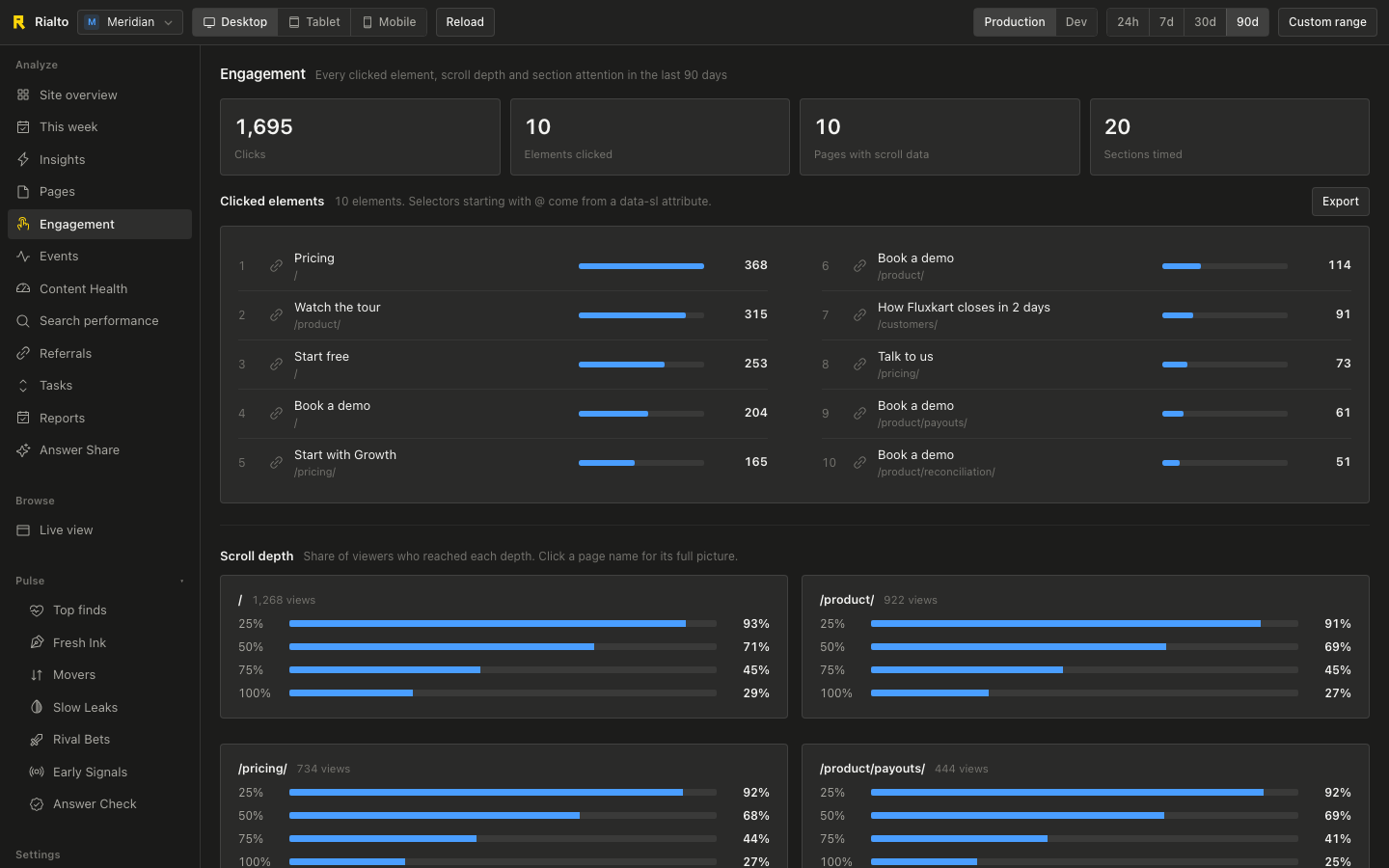
Clicks, with the words a person saw
Every clicked element ranked by its own visible label. No event naming, no tagging plan, no guessing which button "cta_2" was.
Scroll depth, as a funnel
How far each page really carries its readers, marked at every quarter. Compare the drop-offs with the position of the page's content and calls to action.
Section attention, timed
Name a block and Rialto times how long visitors actively hold on it.
One goal, leading
Name an event as the conversion and the overview leads with the rate.
demo_request, this week
Campaigns, automatically
Standard utm parameters are recorded from the first tagged visit and broken out in the overview.
The Monday digest
Every week against the last, per site, written automatically and sent to your inbox: rising and falling pages, most-used elements, the goal, and Answer Share movement.
Consent is handled for you. And a decline never blinds you.
Everything counts, nobody is remembered
The tag detects a consent tool already on the page - a TCF popup, Cookiebot, OneTrust - and obeys it. If there is none, it asks once itself. Either way, measurement starts at the first pageview:
- Every click, scroll and active second, counted anonymously
- Visitors counted through a hash regenerated daily
- Goals, campaigns and the digest all fully working
One cookie adds memory
Accept sets a single first-party cookie, salted and hashed before storage. The same browser becomes recognisable across days, and three surfaces unlock:
- New against returning visitors
- True uniques across any date range
- Multi-day attribution back to the first campaign
Painted onto the live page.
The viewer opens your real site inside the app with the numbers drawn on the elements themselves: click counts on the buttons, attention on the sections. Reading a chart is optional when the page can show you directly.
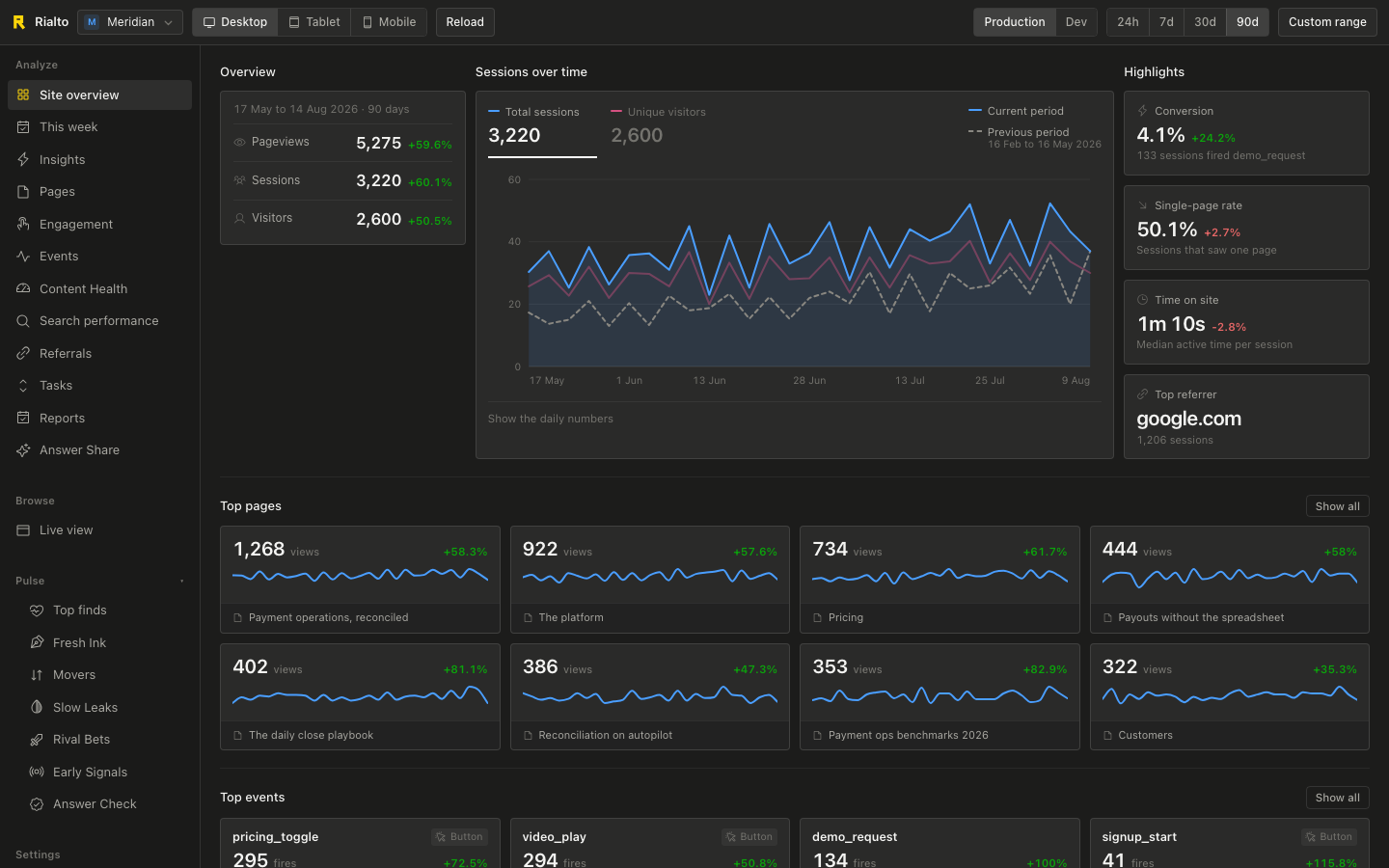
The overview earns its first glance.
Sessions, the conversion rate, top pages, campaigns and events on one screen, with long ranges bucketed so trends read as trends. This is the screen the Monday digest is written from.
One tag, any stack. If it serves HTML, it works.
Questions
What does Rialto record without a cookie?
Pageviews with the page title, every click with the element's visible label, scroll depth, active time against idle, section attention, campaigns and custom events. All of it works before any consent click.
How does it count people with no cookie?
With a hash of the day, the address and the browser, regenerated every day. It cannot recognise anyone tomorrow and cannot be reversed into a person, which is exactly why it needs no consent.
What do I lose by not setting a cookie?
Recognising the same browser across days. Returning-visitor counts and multi-day attribution both need that, which is why consent adds a cookie rather than the product refusing to use one.
Does a visitor who declines disappear from the numbers?
No, and this is the part that differs from most tools. A decline costs you memory, not the visit: the session is still counted anonymously, so your totals describe your traffic rather than the subset who agreed.
Can I export the data?
Yes, as CSV, on any day you want it. There is no lock-in and no export fee.